
Why the Smart-Card Hardware Wallet Is Finally Making Multi-Currency, NFC-Based Cold Storage Practical
Whoa! I remember the first time I held a smart-card crypto wallet — it felt like a credit card from the future. Medium-sized devices used to be the norm, clunky and wallet-shaped; now, a thin card that fits in a phone slot changes how you think about custody. Initially I thought these cards would be a gimmick, but then I started using one for everyday transfers and long-term holdings and my instinct shifted hard. Something felt off about cold storage being so inaccessible before — too many steps, too many passwords — and this form factor fixes several of those friction points.
Here’s the thing. NFC unlocks a neat middle ground: air-gapped security with phone convenience. Seriously? Yes. You tap the card, confirm a transaction, and the private key never leaves the sealed hardware. My gut reaction when I first tested it was a little skeptical — somethin’ about trusting a small device — but repeated use showed consistent behavior, tight UX, and strong signature isolation.
On one hand, traditional seed-phrase methods are resilient and vendor-neutral. On the other hand, they are often user-hostile, especially for people who want simple multi-currency holdings. Hmm… the card deals with that by storing private keys in secure elements designed to resist tampering, while the phone handles the user interface. And actually, wait—let me rephrase that: the card is not magic; it relies on industry-standard secure elements and careful firmware design, which makes it robust but not infallible.
My first project with a smart-card wallet involved consolidating five different coins for a friend who travels a lot. It was a real mess before: multiple apps, multiple mnemonic backups, and the constant paranoia about phishing. But moving those assets to a single NFC-backed card made daily access much faster and the backup situation less error-prone. There’s a trade-off, of course — one physical card is a single point of loss if you don’t have an appropriate recovery plan — so you still need redundancy. I recommend at least two backups, geographically separated, and a dead-man’s switch of sorts for high-value holdings.
Longer-term, the thing that surprised me was how multi-currency support matured. Early cards supported only a handful of tokens and were essentially glorified Bitcoin-only devices. Now, the landscape includes cards that can manage native keys for Ethereum, Bitcoin, and several major chains, while delegating coin-specific logic to the mobile app or a cloudless signing process. That matters because users don’t want eight different cards or eight different workflows for each chain.
Where NFC and Multi-Currency Design Actually Win — and Where They Don’t
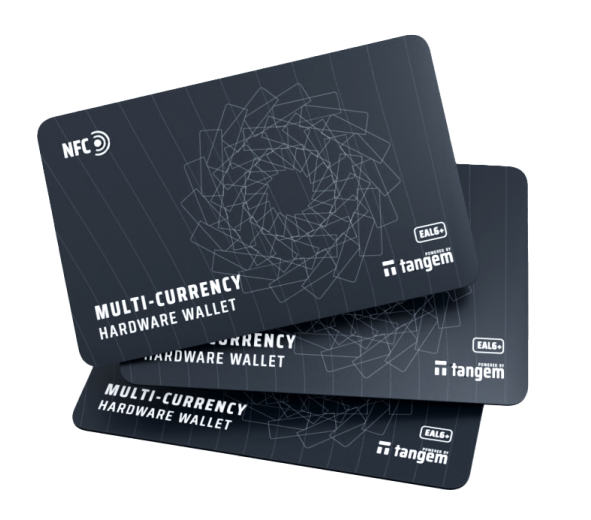
Okay, so check this out—NFC-based cards excel in convenience, and they reduce a lot of attack surface by keeping signing offline. The mobile app becomes a view-and-broker, never holding your private key, while the card executes signatures within its secure element. I’m biased, but that’s a very compelling model for non-custodial users who still want somewhere to tap and go. And if you want to read more about a popular implementation, consider the tangem wallet as an example of this approach in the wild.
However, reality is messier. On one hand, NFC chips in phones vary in capability and reliability. On the other hand, firmware updates for cards need to be handled carefully — push updates could be risky, though many vendors adopt a signed-firmware model to mitigate that. Initially I thought over-the-air firmware would be a no-go, but then realized signed updates are workable and sometimes necessary to patch edge-case vulnerabilities or to add new token standards. Still, update processes must be transparent and auditable, or they become a single-vendor trust problem.
Another practical snag: some blockchains require complex interactions during signing, like custom pre-sign logic or multiple-step messages. Cards are getting smarter, yet there are chains where the UX is clunky because the card and app must coordinate multi-stage data exchange. That bugs me, because in an ideal world the card would be agnostic and the app would translate seamlessly — though actually, that’s mostly a problem of standards adoption more than hardware capability.
Speaking of standards, the industry needs better, shared token descriptors and signing schemas. On one hand, proprietary stacks can optimize UX for a vendor’s ecosystem. On the other, proprietary formats fragment user experience and reduce interoperability. My working view is that open standards, even if imperfect, encourage more robust multi-currency support over time, because wallet developers can reuse signing libraries and reduce bespoke implementations.
Security is, of course, paramount. A secure element with a certified random number generator and tamper resistance is not just marketing jargon; it’s the difference between plausible commerce and reckless custody. But I also want to be honest: physical attacks and supply-chain compromise are real risks. If someone intercepts the card before you receive it, or swaps firmware, the guarantees weaken. The practical defense is provenance — buy from reputable channels, check card tamper-evidence, and validate firmware signatures.
One thing that surprised me is how much human factors matter. People will choose convenience over absolute security in predictable ways. So a card that balances ease-of-use with strong protection tends to get more real-world adoption than a theoretically superior but unusable alternative. That tension drives design decisions and sometimes forces compromises. For instance, adding biometric gating on the phone app is convenient, but it doesn’t add cryptographic security to the key itself — it’s a UX gate, not a key gate. Still, that UX gate reduces accidental transactions and phishing success for many users.
Now, let’s talk about recovery: cold storage in a card implies a backup strategy. Physical cards can be duplicated (with vendor-specific schemes), or you can use air-gapped seed backups encrypted and stored across multiple locations. I’m not 100% sure there’s a one-size-fits-all plan here — the right choice depends on the user’s threat model. For most people, though, a secondary card kept in a safe and a written encrypted BIP39-like backup (if supported) is a practical pattern.
Finally, adoption dynamics matter. NFC cards are quietly becoming standard for travel-friendly crypto holders and privacy-minded users who value minimalism. Banks and institutional players are also watching, because the card form factor dovetails with existing plastic distribution channels. If hardware manufacturers and wallet providers coordinate on standards, we could see faster growth and better interoperability. For now, expect incremental improvements and occasional surprises.
FAQ
Are NFC smart-card wallets as secure as traditional hardware wallets?
Short answer: mostly yes, when implemented correctly. Long answer: security depends on the secure element, firmware signing, supply-chain controls, and user practices. Cards isolate private keys similarly to ledger-like devices, but you should verify provenance and understand vendor-specific recovery options.
Can one card handle multiple cryptocurrencies safely?
Yes — many modern cards support multi-currency signing by handling separate keypairs per chain or by delegating chain-specific logic to the app while keeping keys in the card. Check compatibility before making a migration plan, since token support and signing methods differ across chains.
What if I lose the card?
If you lose the card without an off-card backup, recovery can be impossible. So, keep multiple backups or a recovery card. Vendor tools may allow cloning under certain secure procedures, but you should treat the physical card as a high-value asset and plan accordingly.
Leave a Reply
Want to join the discussion?Feel free to contribute!